On-Page SEO is one of the most important aspects of search engine optimization. It focuses on optimizing individual web pages so they rank higher in search engines and attract relevant organic traffic. From keyword usage to content structure and user experience, On-Page SEO helps search engines understand your content and users engage with it.
In this guide, we’ll explain On-Page SEO in simple terms and show how you can optimize your website pages effectively.
What Is On-Page SEO?
On-Page SEO (also known as on-site SEO) refers to optimizing content and HTML elements on a webpage to improve search engine rankings. Unlike off-page SEO, which focuses on backlinks, On-Page SEO is fully under your control.
On-Page SEO ensures that your content is:
- Relevant to search queries
- Easy to read and understand
- Well-structured for search engines
- Optimized for user experience
Why On-Page SEO Is Important
On-Page SEO is important because:
- Search engines analyze page content to determine rankings
- Proper optimization increases visibility for target keywords
- Well-structured pages improve user engagement
- Higher relevance leads to better click-through rates
Without On-Page SEO, even technically perfect websites may fail to rank.
Key Elements of On-Page SEO
1. Keyword Research and Placement
Keywords help search engines understand what your page is about.
Best Practices:
- Use one primary keyword per page
- Include keywords naturally in the title, headings, and content
- Avoid keyword stuffing
- Use related and semantic keywords
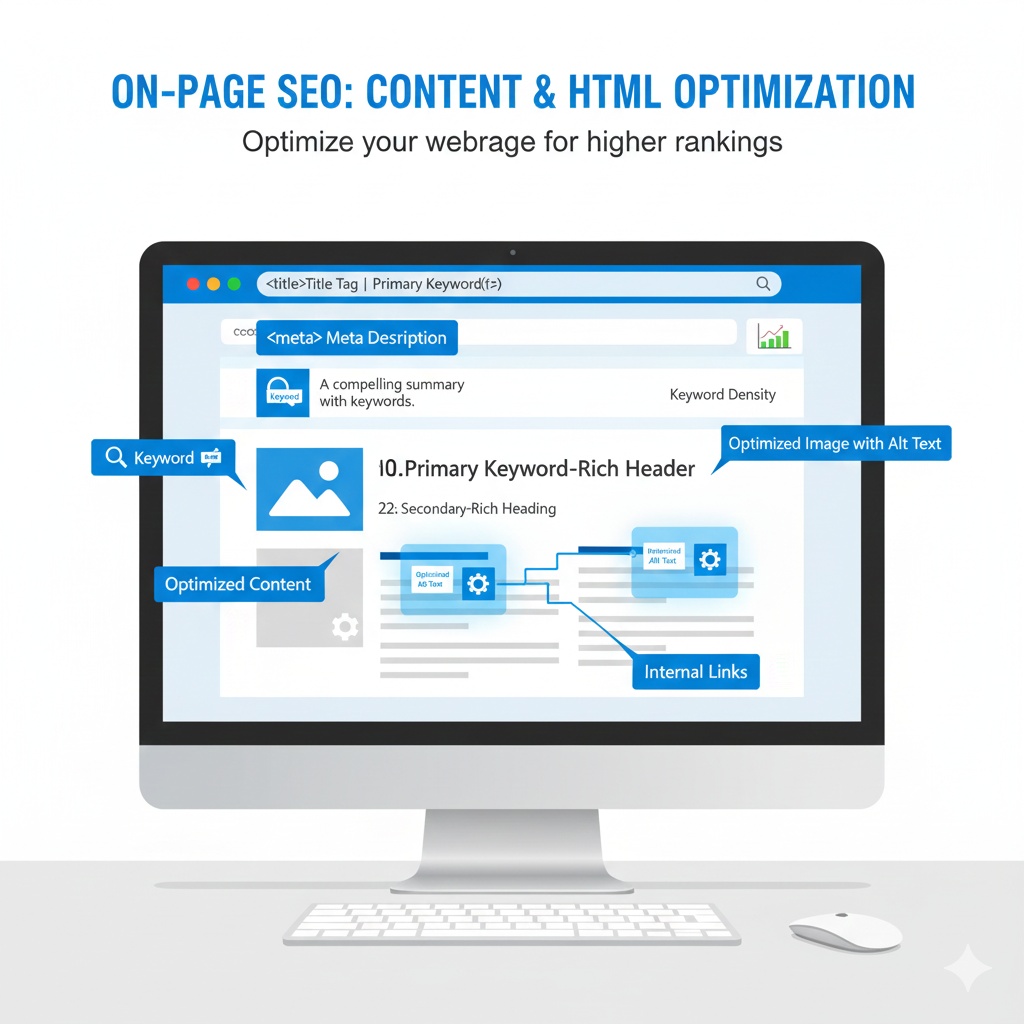
2. SEO-Optimized Title Tags
Title tags are one of the most important ranking factors.
Tips for Title Tags:
- Keep titles under 60 characters
- Place the primary keyword near the beginning
- Make titles engaging and click-worthy
3. Meta Descriptions
Meta descriptions don’t directly affect rankings but influence click-through rates.
Best Practices:
- Keep meta descriptions under 160 characters
- Include the main keyword naturally
- Write compelling descriptions that encourage clicks
4. Heading Tags (H1, H2, H3)
Headings improve content structure and readability.
Best Practices:
- Use one H1 tag per page
- Include keywords in H1 and H2 where relevant
- Maintain a logical heading hierarchy
5. High-Quality Content
Content is the heart of On-Page SEO.
What Makes Good Content:
- Original and informative
- Addresses search intent
- Well-structured with short paragraphs
- Includes images, lists, and examples
6. URL Optimization
SEO-friendly URLs improve clarity and usability.
URL Tips:
- Keep URLs short and descriptive
- Use hyphens instead of underscores
- Avoid unnecessary parameters
7. Internal Linking
Internal links help search engines discover pages and pass link equity.
Best Practices:
- Link related pages naturally
- Use descriptive anchor text
- Avoid excessive linking
8. Image Optimization
Images enhance user experience but must be optimized.
Image SEO Tips:
- Use descriptive file names
- Add keyword-rich alt text
- Compress images for faster loading
9. User Experience (UX) Signals
Search engines consider user behavior as ranking signals.
UX Optimization Includes:
- Easy navigation
- Fast page load time
- Mobile-friendly layout
- Clear call-to-action
10. Content Freshness
Regular updates signal relevance to search engines.
How to Keep Content Fresh:
- Update statistics and examples
- Add new sections or FAQs
- Improve formatting and readability
Common On-Page SEO Mistakes
- Keyword stuffing
- Duplicate content
- Missing title tags or meta descriptions
- Poor content structure
- Ignoring internal linking
- Not optimizing images
Tools for On-Page SEO
Popular tools to optimize On-Page SEO include:
- Google Search Console
- Google Analytics
- Yoast SEO / Rank Math
- Ahrefs / SEMrush
- Surfer SEO
Final Thoughts
On-Page SEO is the foundation of content visibility. When done correctly, it helps search engines understand your content and users find exactly what they’re looking for. Combined with Technical SEO and Off-Page SEO, On-Page SEO can significantly improve your website’s rankings and organic traffic.
If you want consistent SEO growth, master On-Page SEO.