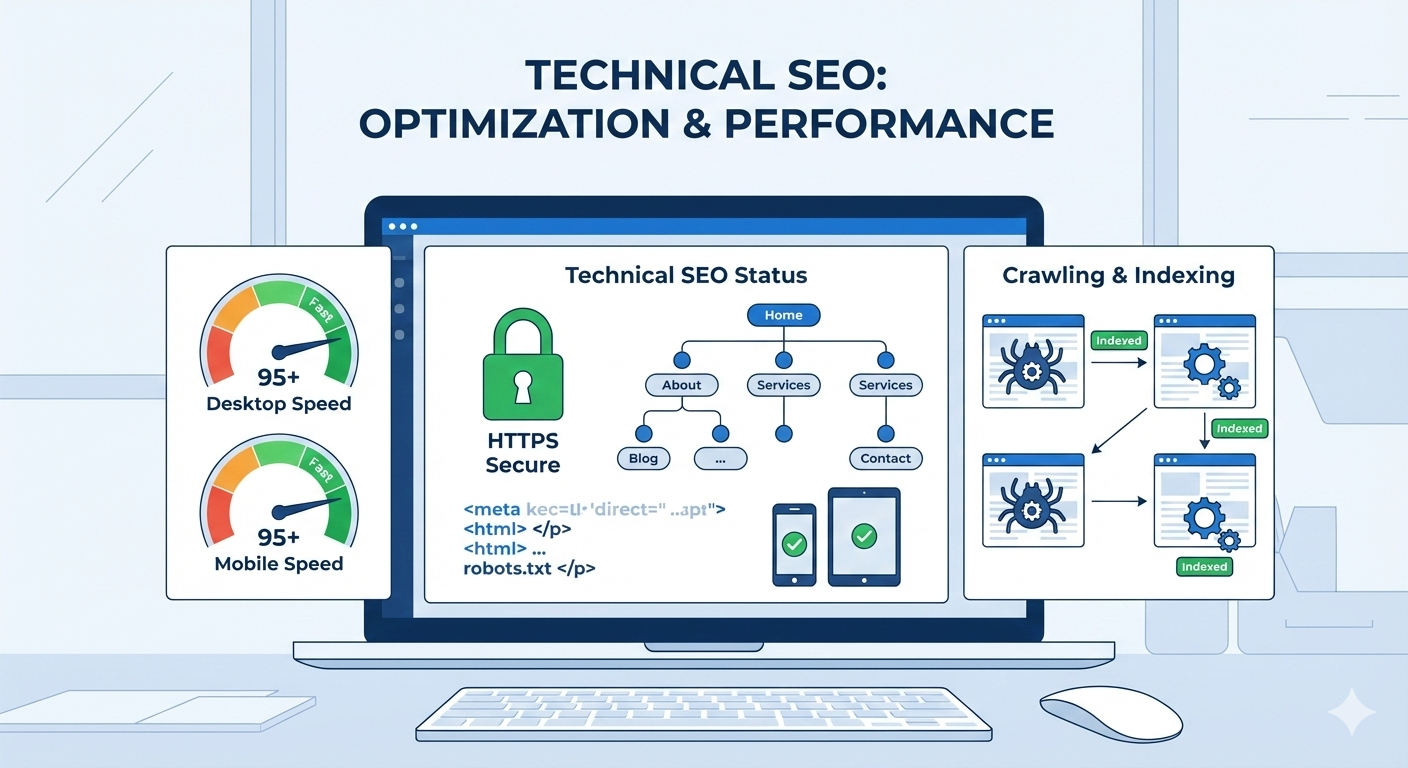
Technical SEO is the backbone of every successful SEO strategy. Even the best content and strongest backlinks won’t deliver results if your website isn’t technically optimized. Technical SEO focuses on improving the structure, performance, and backend elements of a website so search engines can easily crawl, index, and rank it.
In this blog, we’ll explain Technical SEO in simple language and show how it helps improve rankings, traffic, and user experience.
What Is Technical SEO?
Technical SEO is the process of optimizing a website’s technical infrastructure to help search engines access, understand, and index pages efficiently. It does not focus on content or backlinks but on how well your website works behind the scenes.
Technical SEO ensures that your website is:
- Fast
- Secure
- Mobile-friendly
- Easy to crawl and index
Why Technical SEO Is Important
Technical SEO plays a crucial role because:
- Search engines must crawl and index your pages to rank them
- Faster websites provide better user experience
- Mobile-friendly websites rank higher on Google
- Secure websites build trust and credibility
Without Technical SEO, your website may struggle to appear in search results, no matter how good your content is.
Core Elements of Technical SEO
1. Website Crawling and Indexing
Search engines use bots to crawl websites. If bots can’t access your pages, those pages won’t rank.
Best Practices:
- Submit an XML sitemap
- Optimize the robots.txt file
- Avoid blocking important pages
- Monitor indexing via Google Search Console
2. Page Speed Optimization
Website speed is a confirmed Google ranking factor. Slow-loading pages increase bounce rates and reduce conversions.
Ways to Improve Speed:
- Compress images
- Minify CSS and JavaScript
- Enable browser caching
- Use fast hosting
- Optimize server response time
3. Mobile-Friendliness
Google uses mobile-first indexing, meaning it evaluates the mobile version of your site first.
Mobile Optimization Tips:
- Use responsive design
- Ensure fast mobile loading
- Avoid intrusive pop-ups
- Make buttons and text easy to tap
4. HTTPS and Website Security
Security is essential for both users and search engines.
What to Do:
- Install an SSL certificate
- Redirect HTTP to HTTPS
- Fix mixed content issues
5. SEO-Friendly URL Structure
Clean URLs help search engines understand page content and improve user experience.
Best URL Practices:
- Keep URLs short and descriptive
- Use hyphens instead of underscores
- Avoid unnecessary numbers or parameters
- Include relevant keywords
6. Fix Duplicate Content
Duplicate content can confuse search engines and harm rankings.
How to Fix It:
- Use canonical tags
- Avoid multiple URLs for the same page
- Manage pagination properly
7. Structured Data (Schema Markup)
Schema markup helps search engines understand your content better and display rich results.
Benefits:
- Rich snippets in search results
- Higher click-through rates
- Improved visibility
8. Core Web Vitals
Core Web Vitals measure real-world user experience.
Key Metrics:
- Largest Contentful Paint (LCP)
- First Input Delay (FID)
- Cumulative Layout Shift (CLS)
Optimizing these metrics improves rankings and user satisfaction.
9. Internal Linking and Site Structure
A strong internal linking structure helps distribute link equity and improves crawlability.
Best Practices:
- Use logical navigation
- Avoid orphan pages
- Link important pages internally
- Maintain a flat site structure
Common Technical SEO Mistakes
- Slow website speed
- Broken links and 404 errors
- Blocking pages in robots.txt
- Ignoring mobile optimization
- Missing XML sitemap
- Not monitoring Search Console errors
Tools for Technical SEO
Some essential tools include:
- Google Search Console
- Google PageSpeed Insights
- Screaming Frog SEO Spider
- Ahrefs or SEMrush
- GTmetrix
Final Thoughts
Technical SEO is not optional—it’s essential. It lays the foundation for content SEO and off-page SEO to succeed. Regular audits, performance checks, and updates will keep your website healthy and competitive in search results.
If you want long-term organic growth, invest in Technical SEO.