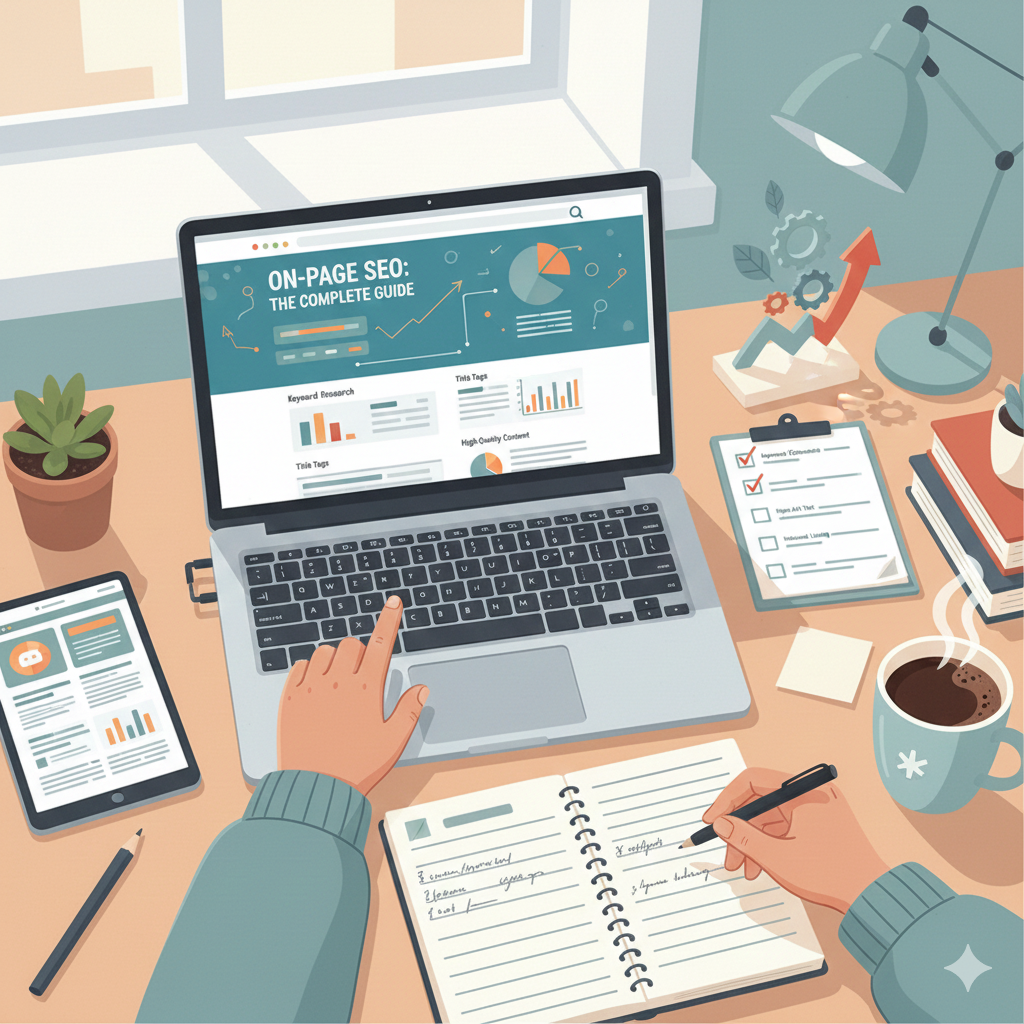
On-Page SEO is the process of optimizing individual web pages to rank higher in search engines and attract relevant organic traffic. It focuses on content quality, keyword optimization, HTML elements, and user experience. On-Page SEO is fully under your control and plays a major role in determining how well your pages perform in search results.
What Is On-Page SEO?
On-Page SEO refers to all the optimization techniques applied within a webpage to improve its search engine rankings. This includes optimizing content, headings, keywords, images, URLs, and internal links.
On-Page SEO helps search engines understand:
- What your page is about
- How relevant it is to a search query
- How useful it is for users
Why On-Page SEO Is Important
On-Page SEO is important because:
- Search engines rely on page content to rank websites
- Optimized pages attract higher-quality traffic
- Good structure improves readability and engagement
- Better UX leads to lower bounce rates
Without On-Page SEO, even strong backlinks may not help pages rank.
Key On-Page SEO Factors
1. Keyword Research & Usage
Keywords connect your content with user searches.
Best Practices:
- Target one main keyword per page
- Use keywords naturally
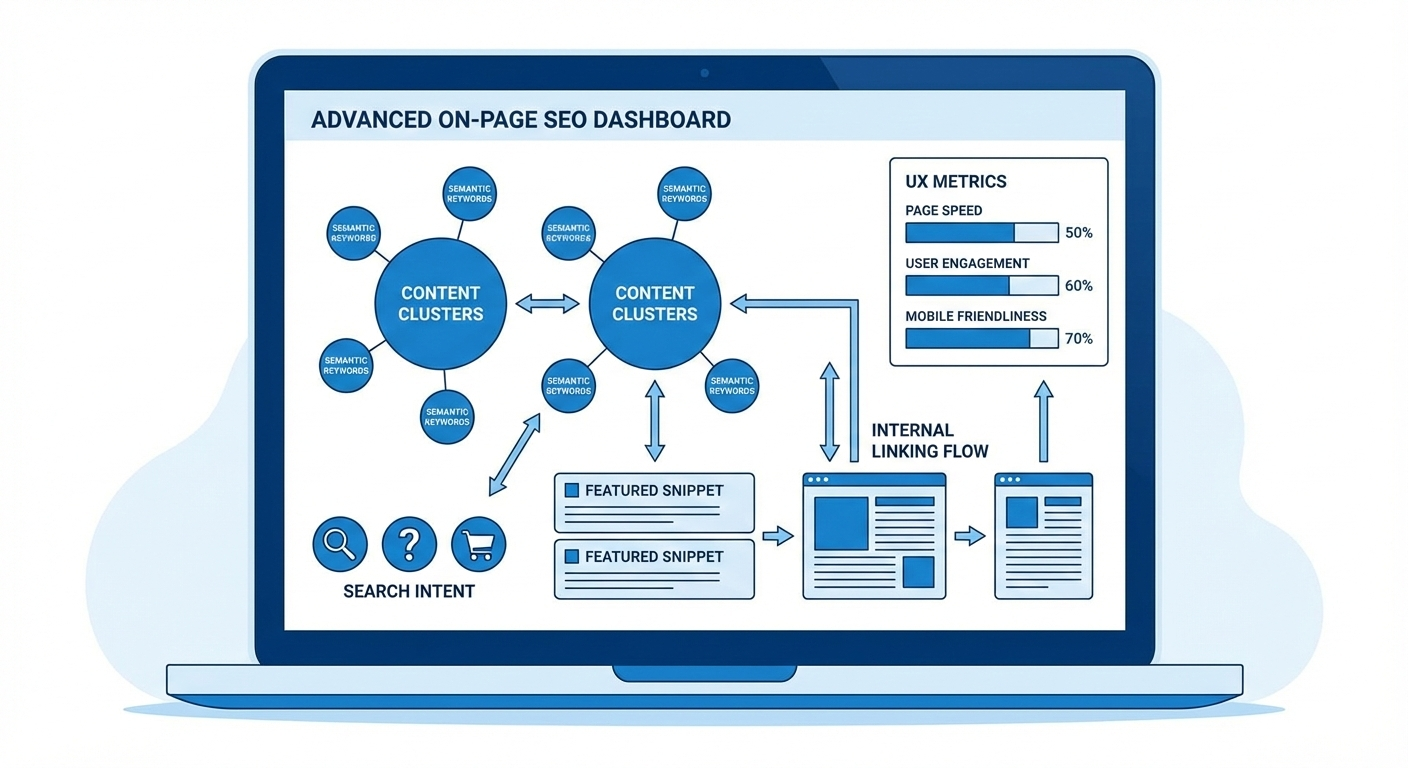
- Add related and semantic keywords
2. Title Tag Optimization
The title tag is a key ranking and click-through factor.
Tips:
- Keep it under 60 characters
- Include the main keyword
- Make it compelling
3. Meta Description
Meta descriptions improve CTR (Click-Through Rate).
Best Practices:
- Under 160 characters
- Clear and persuasive
- Include keywords naturally
4. Heading Tags (H1–H6)
Headings organize content for users and search engines.
Guidelines:
- One H1 per page
- Use H2 and H3 for sections
- Maintain hierarchy
5. High-Quality Content
Content is the backbone of On-Page SEO.
Good Content Should Be:
- Original and valuable
- Easy to read
- Well-structured
- Aligned with search intent
6. Image Optimization
Optimized images improve page speed and accessibility.
Image SEO Tips:
- Use descriptive filenames
- Add alt text
- Compress images
7. Internal Linking
Internal links distribute authority and improve crawlability.
Best Practices:
- Link related pages
- Use relevant anchor text
- Avoid over-linking
8. URL Structure
SEO-friendly URLs help both users and search engines.
Best Practices:
- Short and readable
- Keyword-focused
- No unnecessary symbols
Common On-Page SEO Mistakes
- Keyword stuffing
- Duplicate content
- Missing meta tags
- Poor formatting
- Ignoring image SEO
Final Thoughts
On-Page SEO builds the foundation of successful rankings. When your content is optimized properly, search engines understand it better and users engage with it more. Combined with Technical and Off-Page SEO, On-Page SEO drives long-term organic growth.