Basic On-Page SEO is no longer enough to compete in today’s search results. Search engines now focus on search intent, content depth, user engagement, and semantic relevance. Advanced On-Page SEO helps your pages outperform competitors and rank consistently.
What Is Advanced On-Page SEO?
Advanced On-Page SEO goes beyond keywords and meta tags. It focuses on:
- Search intent optimization
- Semantic SEO
- Content depth and structure
- User behavior signals
The goal is to fully satisfy the user, not just match keywords.
Key Advanced On-Page SEO Techniques
1. Search Intent Optimization
Every keyword has intent:
- Informational
- Navigational
- Transactional
- Commercial
Best Practice:
Match your content format (blog, guide, list, landing page) with search intent.
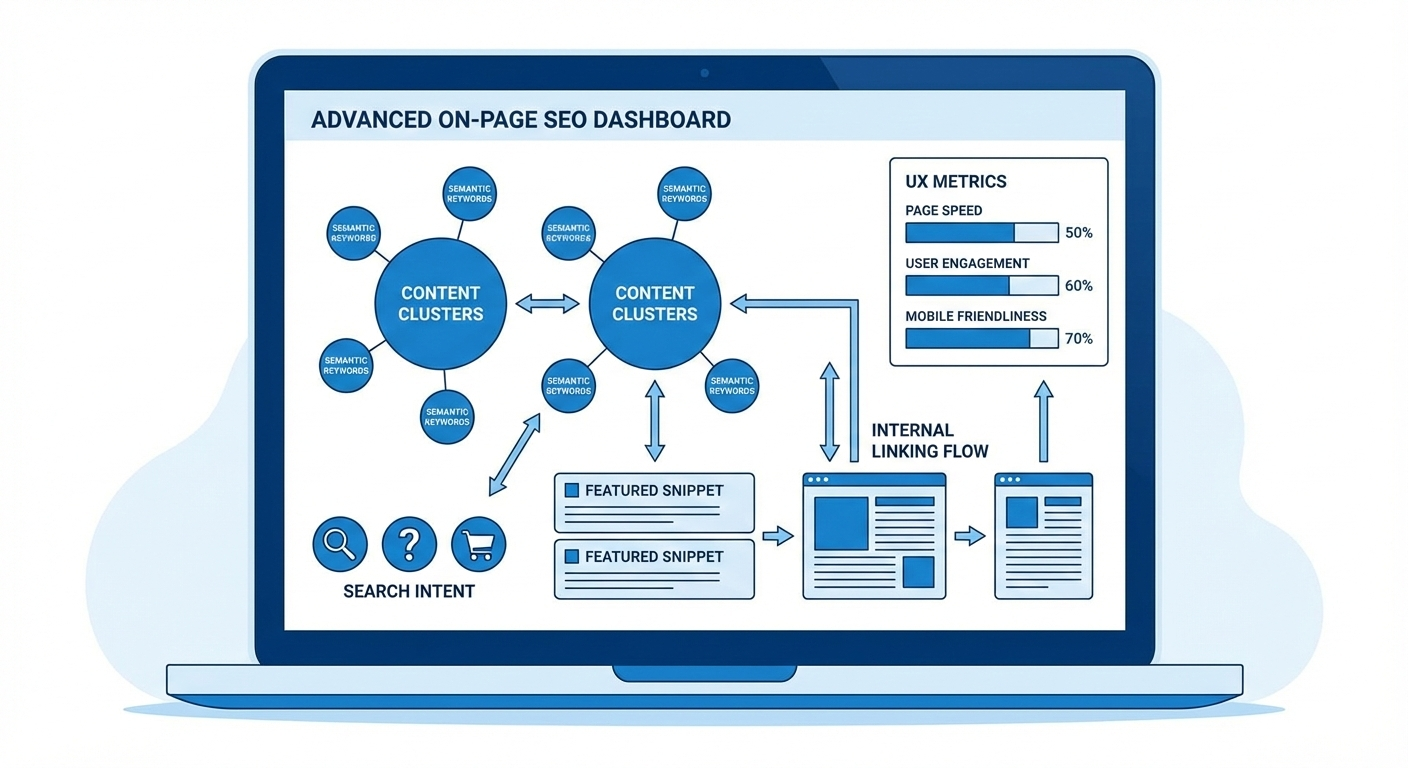
2. Semantic SEO & Topic Clusters
Search engines understand topics, not just keywords.
How to Implement:
- Use related keywords and synonyms
- Build topic clusters
- Link supporting articles to a pillar page
3. Content Depth & Topical Authority
Thin content doesn’t rank anymore.
Improve Depth By:
- Answering related questions
- Adding examples, FAQs, and comparisons
- Covering the topic end-to-end
4. Featured Snippet Optimization
Featured snippets bring massive visibility.
Tips:
- Use clear definitions
- Add bullet points and tables
- Answer questions directly
5. UX Signals (Behavioral SEO)
User behavior impacts rankings.
Key Signals:
- Dwell time
- Bounce rate
- Scroll depth
Improve UX By:
- Clear formatting
- Short paragraphs
- Visual elements
6. Internal Link Optimization
Advanced internal linking boosts authority flow.
Best Practices:
- Link from high-authority pages
- Use keyword-rich anchor text
- Avoid orphan pages
Common Advanced On-Page SEO Mistakes
- Ignoring search intent
- Over-optimization
- Thin content
- Poor UX design
Final Thoughts
Advanced On-Page SEO is about quality, relevance, and user satisfaction. When your content answers every possible user question clearly, rankings naturally follow.